
Light, Time, and How a Home Feels
Light is often treated as practical - something to be added once decisions are made, fittings chosen, colours settled. But in a home, light is never an afterthought. It is the quiet force that shapes everything else.
It determines how colour behaves, how space is perceived, and how a room feels at different moments of the day. The same wall can feel warm, cool, soft, or sharp - all without changing its colour at all.
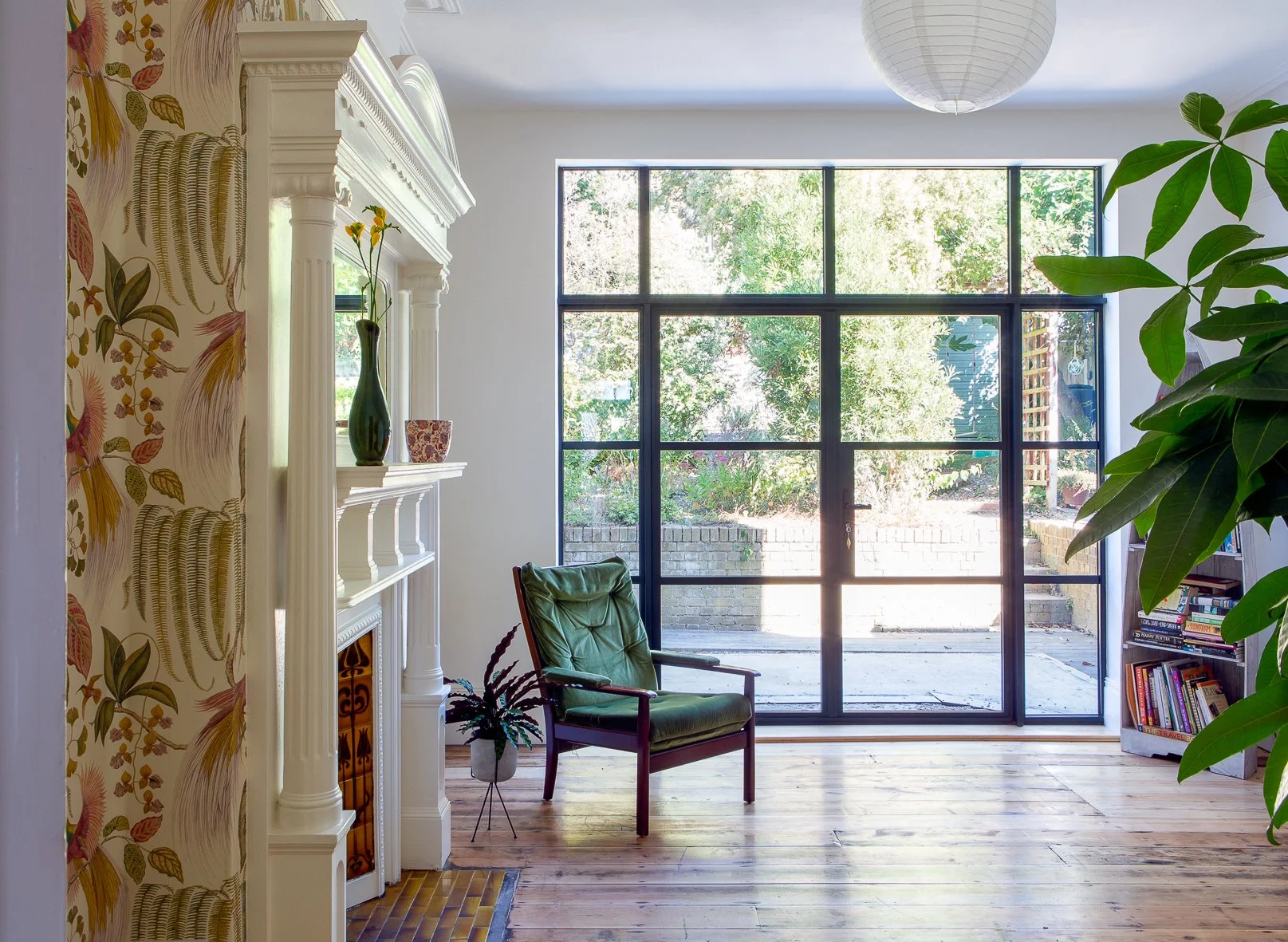
Photography by Jo Bridges - see Portfolio
Light is never static
Unlike furniture or finishes, light is constantly moving.
Morning light can feel pale and reflective, while afternoon light deepens colour and sharpens contrast. Evening brings something else entirely - softer, slower, often more forgiving.
This is why rooms rarely feel the same throughout the day, and why spaces that feel unsettled may be responding to light rather than other elements such as layout.
Colour follows light, not the other way around
It’s tempting to think of colour as the starting point. But in practice, light usually leads.
Natural orientation, window placement, surrounding buildings, and planting outside all influence how colour appears once it’s on the wall. Artificial light adds another layer - warmer, cooler, directional, diffused.
When colour is chosen with these conditions in mind, it tends to feel quietly right.
The rooms we love most tend to respect their light
There’s a calmness to spaces that feel in tune with how light enters and moves through them.
Some rooms hold stronger colour beautifully because of their orientation. Others benefit from softness and restraint. Neither is better - they simply respond to what’s already there.
The most considered homes allow each room to develop its own relationship with light, rather than forcing uniformity.
Time matters as much as tone
A home isn’t experienced in a single moment.
It’s lived in across mornings, evenings, seasons, and years. Colour and light that feel perfect at midday might feel overwhelming at night, or flat in winter.
Allowing for this range creates spaces that feel comfortable to return to again and again.
A slower way of seeing
Inspired by nature, curated for people, this way of working begins with attention rather than action.
Outdoors, light is observed rather than controlled. Indoors, the same principle applies. When we pause to notice how light behaves, decisions around colour, pattern, and detail tend to fall into place more naturally.
Would you like to read more?
If you enjoyed reading this, you may like to download A Colour Story - a thoughtful guide to choosing colour.
Join the list for reflections on colour, interiors, pattern and the observations that quietly shape the way we live.
It’s sent once a month, with the occasional additional note if there’s something genuinely worth sharing.